
Chloride Testing Explained: What the Lab Report on Your Building's Concrete Actually Tells Your Board
If your board has been through a Phase 2 milestone inspection, you've probably seen it: a table buried in the back of the engineer's report, rows of sample numbers and percentages, maybe a few cells shaded red. That's the chloride testing data, and for most board members it's the least understandable part of an otherwise readable report. Unlike a photo of a cracked balcony or a patch of rust staining, chloride numbers don't mean anything at a glance — but they often matter more than anything else in the document when it comes to how your restoration project gets scoped, priced, and warrantied.
What Chloride Testing Actually Measures
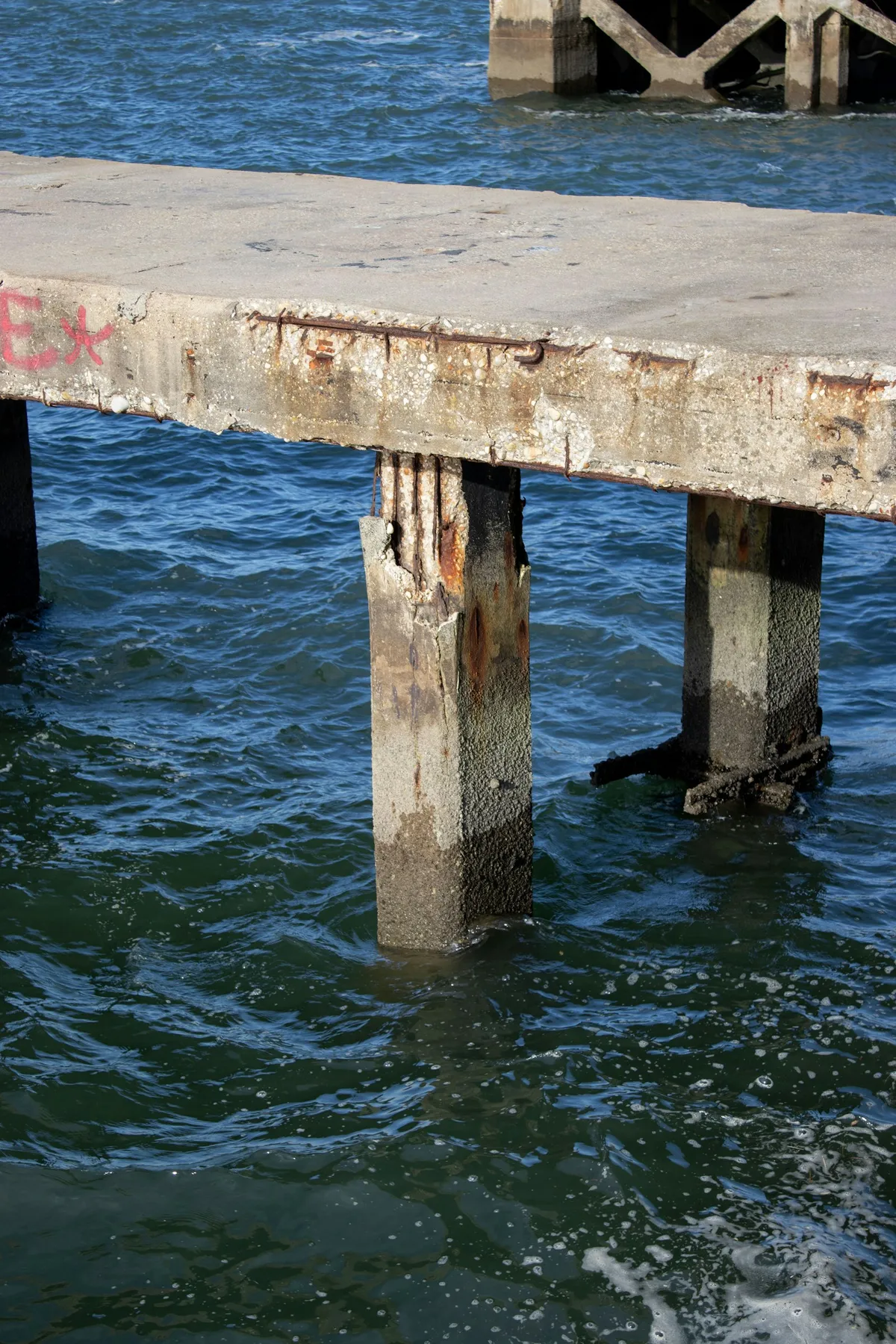
Concrete protects the steel rebar inside it with a natural, highly alkaline layer that keeps the steel from rusting — engineers call it the passivation layer. Chloride ions, which arrive in coastal Southwest Florida buildings mainly through salt-laden air, wind-driven rain, and groundwater, slowly work their way through the concrete toward that rebar. Once enough chloride accumulates at the depth of the steel, it breaks down the passivation layer and corrosion begins, even if the surface of the concrete still looks perfectly sound.
To test for this, a lab technician or engineer drills small-diameter powder samples at set depths — often at the rebar depth specifically, not just the surface — and sends them to an accredited materials lab. The lab measures chloride ion content, typically reported as a percentage by weight of cement or in parts per million, and compares it against an established corrosion-initiation threshold. That threshold is the number everything else in the report hinges on.
Reading the Lab Report
Most chloride testing reports are organized by sample location — a specific balcony, a section of parking garage slab, a stretch of exterior wall — and depth, since chloride concentration is rarely uniform through the thickness of a concrete member. Each sample result gets compared to the threshold, and the report will usually flag results as below threshold, approaching threshold, or above threshold.
- Below threshold: the passivation layer at that location is likely still intact. Corrosion hasn't started from chlorides, even if the concrete shows other wear.
- Approaching threshold: chlorides are migrating toward the rebar but haven't reached corrosion-initiating levels yet. This is often where engineers recommend monitoring or preventive sealing rather than structural repair.
- Above threshold: active corrosion is expected or already underway at the rebar, whether or not it's visible yet on the surface. This is the number that drives structural repair scope.
The depth of the sample matters as much as the result. A high chloride reading an inch into the concrete, well above the rebar, is a very different finding than the same reading taken directly at the steel. Boards reviewing a report should ask specifically whether sampling was done at rebar depth — it's the number that predicts what's actually happening to your structure, not just what's happening to the surface.
What the Numbers Mean for Your Repair Scope
This is where chloride data changes the restoration conversation. A balcony with visible spalling but chloride levels below threshold in the surrounding concrete can often be handled with a conventional spot repair: remove the deteriorated concrete, clean and coat the exposed rebar, patch, and recoat. The surrounding concrete isn't contaminated, so there's no reason to expect the repair to fail prematurely.
A balcony with the same visible damage but chloride levels above threshold throughout the surrounding slab is a different project. Patching only the visibly spalled area while leaving chloride-contaminated concrete in place around it is a known way to get a repair that fails again within a few years — the chlorides keep driving corrosion in the concrete you didn't touch, and that corrosion eventually reaches the new patch from the sides. In these cases, the scope typically has to expand to remove contaminated concrete back to sound, low-chloride material, not just to where the spalling stops being visible, and may call for additional corrosion-mitigation measures like galvanic anodes at the repair perimeter.
That's the practical reason two buildings with similar-looking balcony damage can get very different repair bids: one project is patching damage, and the other is patching damage AND removing contamination that would otherwise keep spreading under a brand-new patch.
Questions Your Board Should Ask
Before your board approves a restoration scope built from a chloride testing report, it's worth asking your engineer and your contractor a few direct questions: Were samples taken at rebar depth, or only near the surface? What threshold was used, and is it consistent with ACI guidance? Does the proposed repair scope extend to all chloride-contaminated concrete, or only to visibly damaged areas? And if contaminated concrete is being left in place anywhere, what corrosion-mitigation method is being used to keep it from compromising the new repair, and how is that reflected in the warranty?
A contractor who can answer those questions specifically, using your engineer's actual sample data rather than a general estimate, is pricing the project your building needs rather than the project that's easiest to bid.
Turning a Lab Report Into a Restoration Plan
We've spent 30+ years translating engineers' milestone inspection findings — chloride data included — into bonded, phased restoration scopes that SWFL condo and HOA boards can actually budget and vote on. That means reading the sample data alongside your engineer's report, pricing a scope that accounts for contamination as well as visible damage, and sequencing the work so residents stay in their units throughout.
If your milestone inspection report came back with chloride testing data your board isn't sure how to interpret, we can walk through it with you and explain exactly what it means for your building. Call us at (239) 282-0891 or visit mcleodsconstruction.com to schedule a walkthrough. Your Project. Our Passion.