
Pressure Washing and Surface Prep: The Difference Between a 15-Year and a 5-Year High-Rise Paint Job
Property managers and condo boards across Fort Myers, Naples, and Punta Gorda often ask the same question after getting painting bids: why does one contractor's price look so much lower than another's for what seems like the same job? The answer almost always comes down to what happens before the paint ever goes on the wall. Pressure washing and surface preparation aren't a line item you can skip to save money — they're the difference between a coating system that protects a high-rise for 15 years and one that starts peeling, chalking, or blistering within 5.
Why Paint Failure on High-Rises Almost Always Starts Below the Surface
When a repaint fails early, the instinct is to blame the paint. In our experience restoring commercial and residential buildings across Lee, Charlotte, and Collier Counties, the coating itself is rarely the problem. Paint is designed to adhere to a clean, stable, properly primed surface — not to chalky stucco, salt residue, mildew, or loose old paint. When any of that is still on the wall when the new coat goes down, the bond never fully forms. The paint may look great on move-out day and still fail within a few seasons, because the substrate underneath it was never ready to hold it.
What Proper Pressure Washing Actually Removes
Coastal Southwest Florida buildings accumulate more than dirt. Salt air, humidity, and heavy rain create a layer of contamination that a garden-hose rinse or a quick low-pressure wipe-down won't touch, including:
- Chalking — the powdery residue left as old paint breaks down under UV exposure
- Mildew and algae growth in shaded stucco recesses, under eaves, and on north-facing walls
- Salt deposits that attract moisture and interfere with adhesion long after the wall looks dry
- Loose, cracked, or peeling paint that needs to come off entirely, not just be painted over
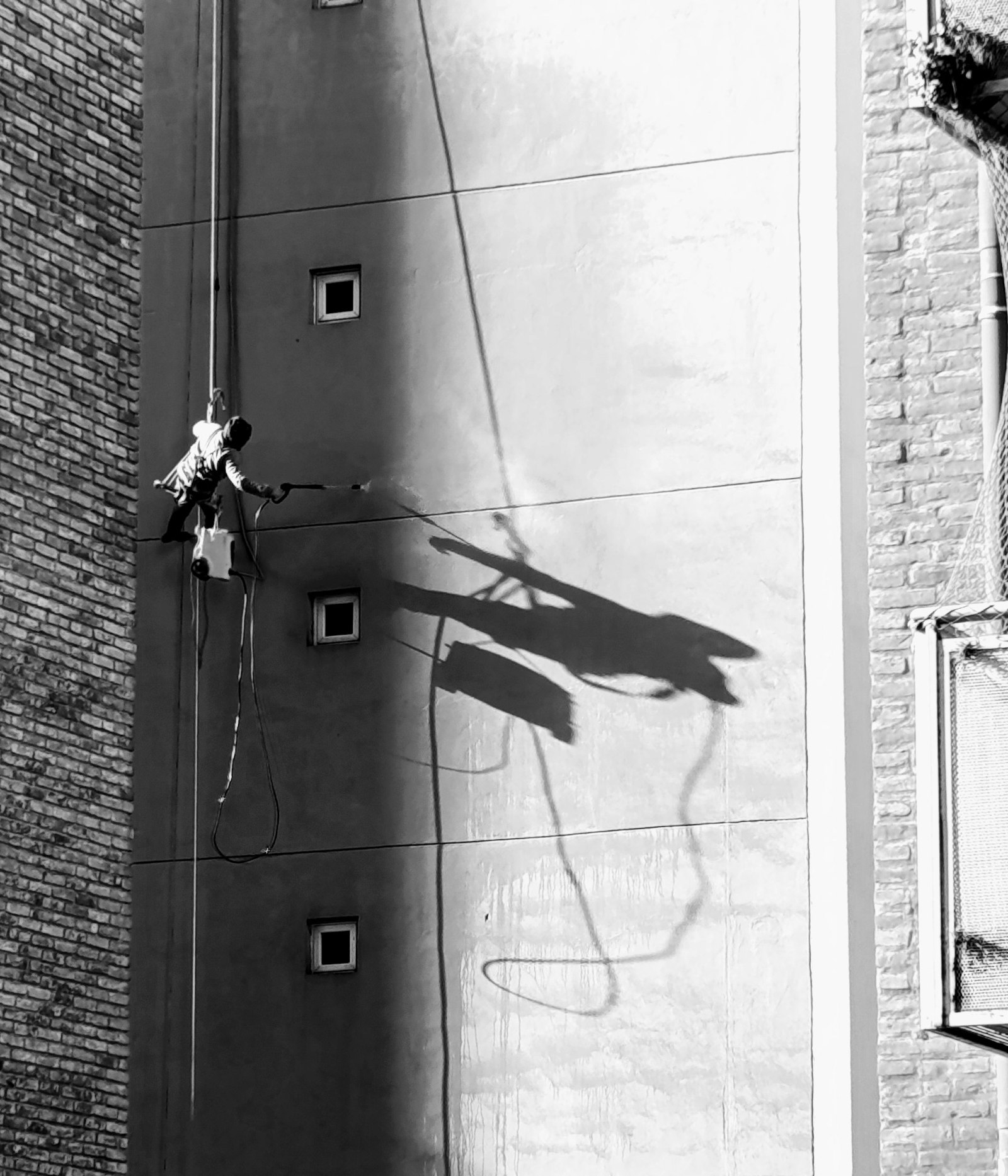
Getting all of that off requires the right pressure, the right nozzle, and the right dwell time for a cleaning solution to work — calibrated differently for smooth stucco, textured EIFS, and older masonry. Too much pressure can etch stucco or drive water behind window seals and control joints; too little leaves contamination behind. This is a skilled step, not a quick rinse before the painters show up.
Surface Prep After Washing: What Has to Happen Before Color Goes On
Pressure washing gets the wall clean, but a clean wall is still not a paint-ready wall. Once everything dries, the real prep work starts:
- Scraping and feathering any remaining loose or peeling paint so edges don't telegraph through the new coat
- Patching hairline stucco cracks and small spalls so they don't reopen and print through fresh paint within a year
- Re-caulking failed sealant joints around windows, doors, and control joints — a step that also protects against water intrusion, not just paint longevity
- Spot-priming bare or repaired areas so the coating absorbs evenly and doesn't flash a different sheen once it cures
On a high-rise, this stage also means coordinating access — swing stages, lifts, or scaffolding — so every square foot actually gets inspected up close instead of being assessed from the ground. Cracks and failed sealant joints that aren't visible from the parking lot are often exactly where the next paint job fails first.
Why Coastal Florida Conditions Make This Step Non-Negotiable
A building in a low-humidity, inland climate can sometimes get away with a thinner prep process. A high-rise or commercial building in Lee, Charlotte, or Collier County can't. Intense UV exposure breaks down coatings faster, wind-driven rain finds every gap in a sealant joint, and salt air accelerates corrosion on anything metal it touches, including rebar just below the surface of stucco and concrete. Skipping or rushing prep in this environment doesn't just shorten a paint job's lifespan — it can mask a water intrusion problem that keeps getting worse behind a fresh coat of paint.
What Separates a 15-Year Coating System From a 5-Year Repaint
The paint brand and color matter far less than most boards expect. A 15-year result generally comes from three things working together: thorough pressure washing calibrated to the substrate, complete surface repair before priming, and a coating system applied at the manufacturer's specified thickness and cure time — not rushed to hit a moving-in date. Cut any one of those corners and even a premium paint will underperform its warranty. That's why an honest bid for a high-rise repaint should always include a detailed washing and prep scope, not just a price per square foot of color.
McLeod's Construction, Paint & Restoration has been preparing and coating commercial high-rises, condominiums, and homes across Southwest Florida for more than 30 years, backed by Florida license CGC1535021 and a track record of 3,000+ completed projects for 500+ clients. Our painting crews don't separate washing and prep from the coating application — our 50+ team members treat it as the job, because it determines whether your board is budgeting for another repaint in 5 years or 15. If your building's exterior paint is due for a refresh, or you want a second opinion on a bid that looks suspiciously low, call us at (239) 282-0891 or visit mcleodsconstruction.com to schedule a walkthrough.