
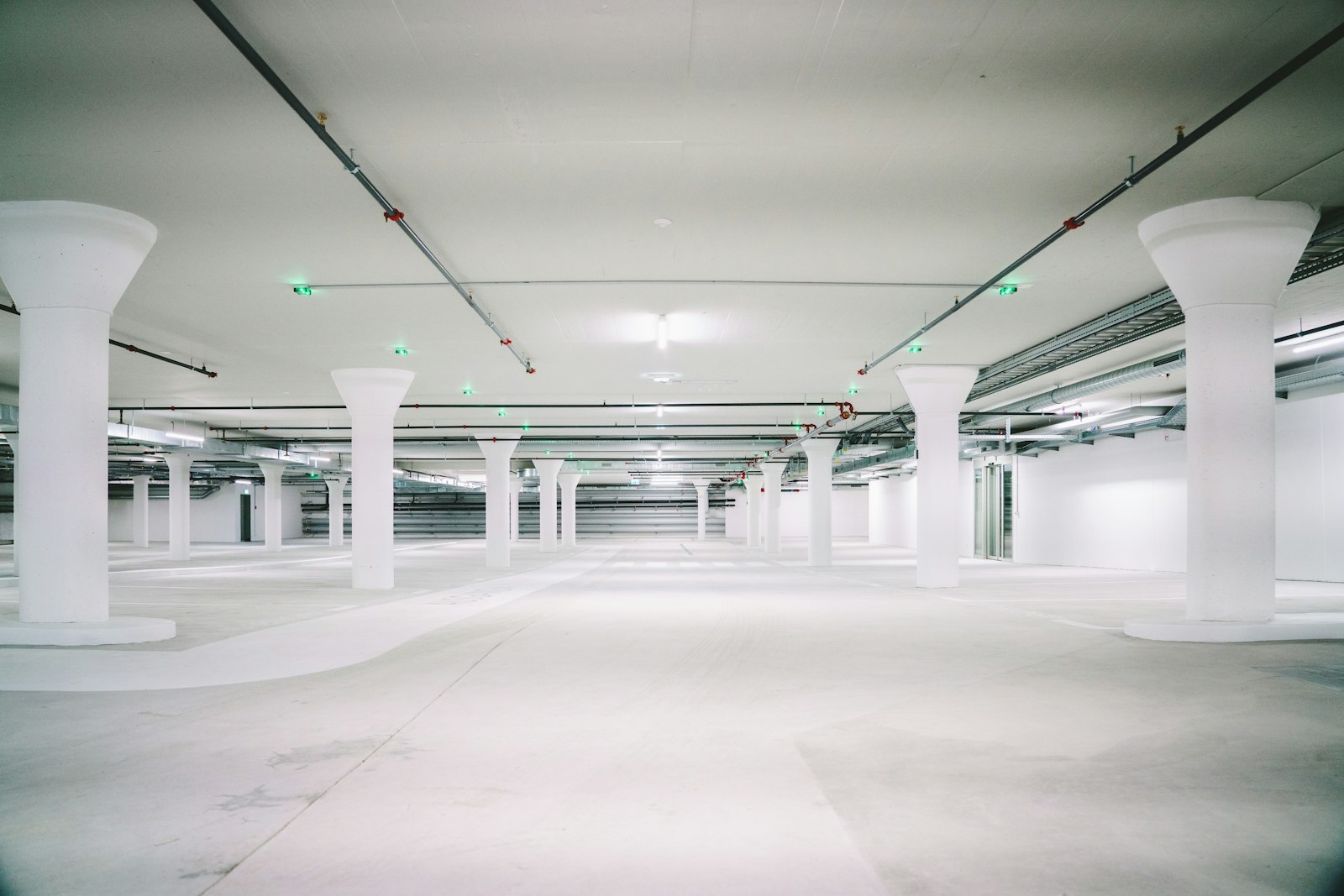
Sealant vs. Membrane Waterproofing: Choosing the Right System for a Below-Grade Parking Garage in Coastal Florida
Below-grade parking garages are some of the toughest waterproofing challenges in Southwest Florida. Between the high water table along the coast, constant hydrostatic pressure pushing against foundation walls, and the corrosive effects of salt air on exposed rebar, a parking structure that sits partially or fully below grade needs a waterproofing strategy that's matched to the actual conditions — not a one-size-fits-all spec pulled off a shelf. At McLeod's Construction, Paint & Restoration, we've worked on enough of these structures across Lee, Charlotte and Collier Counties to know that the sealant-vs-membrane decision isn't academic. Get it wrong and a board is looking at active leaks, spalling concrete and corroding rebar within a few years. Get it right and the structure stays dry and sound for decades.
Two Different Jobs, Not Two Competing Options
The first thing we tell condo and HOA boards is that sealants and membranes usually aren't competing against each other — they're doing different jobs. Sealants are a joint-level solution. They fill and seal control joints, expansion joints, cracks and the gaps where different building materials meet. Membranes are a surface-level solution. They create a continuous waterproof barrier across a slab, wall or deck. A below-grade garage almost always needs both: membrane waterproofing on the exterior foundation walls and slab-on-grade areas, and high-quality sealant at every joint, penetration and transition where the membrane can't do the job alone.
When Membrane Waterproofing Is the Right Call
Membrane systems — whether sheet-applied or fluid-applied — are built for large, continuous surfaces that face sustained water contact or hydrostatic pressure. That describes most below-grade garage walls and slabs in coastal Florida, where the water table can sit just a few feet down. A properly installed membrane, protected by the right drainage board and backfill, is what actually keeps water from migrating through the concrete in the first place. We typically recommend fluid-applied membranes for below-grade walls because they conform to irregular surfaces, form seams, and tie into penetrations more reliably than sheet systems in a retrofit setting where you're working around existing structure rather than building from scratch.
The trade-off is installation complexity. Membrane work requires proper surface prep, correct cure times, and protection during backfill or slab pours — skip any of those steps and you've got a system that looks complete but fails at the first hydrostatic load. This is where experience matters more than the spec sheet.
When Sealant Is the Right Call
Sealants earn their keep at expansion joints, construction joints, cove joints where a wall meets a slab, and around every penetration — drains, conduit, pipe sleeves, column bases. These are the spots that move with the building and that a rigid membrane alone can't accommodate. A high-performance polyurethane or silicone sealant, correctly sized and backed with the right bond-breaker tape, absorbs that movement without opening a path for water. We see a lot of failed garage waterproofing where the field membrane is in decent shape but the joint sealant has failed — because it was undersized, applied over contaminated concrete, or simply never replaced on the 10-15 year cycle sealants actually need in a coastal environment.
What This Means for Boards Budgeting a Project
If your reserve study or a milestone inspection has flagged water intrusion in a parking structure, the scope of work should separate these two systems clearly rather than lumping "waterproofing" into a single line item. A board should expect to see: an assessment of which walls and slabs need membrane work versus spot repair, a full joint-by-joint sealant inventory noting age and condition, and a sequencing plan that accounts for vehicle access and any structural repairs that need to happen before either system goes in. Chloride-induced corrosion and concrete spalling almost always have to be addressed first — waterproofing over compromised concrete just traps the problem.
We also encourage boards to ask contractors for manufacturer warranty terms on both systems, since membrane and sealant products often carry different warranty periods and different substrate-prep requirements to keep that warranty valid. A contractor who can walk you through both systems' warranty language, not just the price, is usually the one who's actually done the work before.
Why This Matters Now
With SB-4D milestone inspections continuing to surface deferred maintenance across SWFL condos and commercial buildings, below-grade parking structures are showing up on more reserve studies than they used to. Addressing sealant and membrane failures together, as part of one coordinated scope, is almost always more cost-effective than chasing leaks year after year with spot patches.
McLeod's Construction, Paint & Restoration has completed waterproofing and restoration work for more than 500 clients and 3,000-plus projects across Southwest Florida, with a team of 50-plus employees and a Florida CGC1535021 general contractor license. If your board is looking at a below-grade parking garage with active water intrusion, we can walk the structure with you, identify where the membrane and sealant systems are actually failing, and put together a scope that fixes the right problem the first time.