
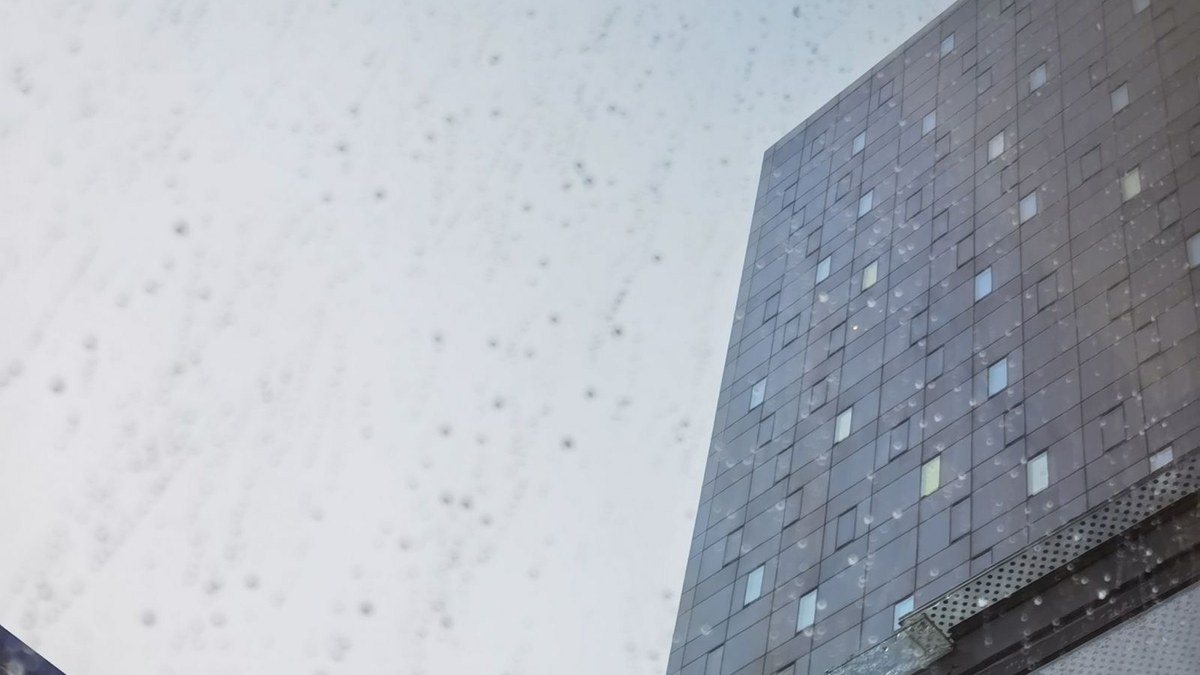
Waterproofing Through Rainy Season: A June-Through-November Checklist for Lee County Property Managers
Southwest Florida's rainy season runs June through November, and we are sitting right in the middle of it. If you manage condominium or commercial property in Lee, Charlotte, or Collier County, the next few months are when your building tells you the truth about its envelope.
Water intrusion almost never announces itself with a dramatic failure. It shows up as a stain on a ceiling in unit 604, a musty smell in a stairwell, efflorescence on a garage wall, a balcony slab that sounds hollow when someone drags a chair across it. Each one is a small signal. Handled early, they are maintenance items. Ignored through a full wet season, they become engineering scopes and special assessments.
Here is the checklist we work through with boards and managers during rainy season — organized by what to document, what to have assessed professionally, and what to get scheduled before the season ends.
Document while it is raining
This is the single most valuable thing a property manager can do, and it costs nothing but timing. Active rain is diagnostic. A dry building hides its problems.
During and immediately after a significant rain event, walk the property and photograph:
- Where water is actually entering. Ceiling and wall staining in units, corridors, stairwells, and elevator lobbies — with the unit number and the date in the photo.
- Which direction the wind was driving. Wind-driven rain from a specific exposure is the most common cause of intrusion in coastal high-rises, and knowing the exposure narrows the investigation dramatically.
- Standing water. Balcony decks that hold water after the rain stops, roof areas that pond, walkways that drain toward the building instead of away from it.
- Drainage that is not doing its job. Overflowing scuppers, blocked deck drains, downspouts discharging against the foundation.
- Elevator pits. Water in the pit is both a water-intrusion problem and a state elevator inspection problem.
A photo log with dates and rain events attached turns a vague board discussion into a scope a contractor can price accurately. It also becomes your record if a warranty or insurance question comes up later.
Have these assessed professionally
The following are not walk-and-look items. They require someone who works on buildings like yours to get on the wall and evaluate them properly.
Sealant joints
Expansion joints, control joints, window and door perimeters, and the transitions between dissimilar materials. Sealant is consumable — it has a service life and it ends. Adhesion loss, cohesive splitting, chalking, and hardening are all visible to someone who knows the failure modes. A joint that has released along one edge is an open path into the wall assembly, and it does not repair itself.
Balconies and walkway decks
Coating wear at the traffic paths, cracking at slab edges, failed drip edges, and delamination — the hollow sound underfoot that indicates the coating has let go of the substrate. Balcony edges also tell you about the concrete underneath: rust staining or spalling means reinforcement is corroding, and that is a structural conversation, not a coating one.
Stucco and painted surfaces
Cracking patterns matter more than crack counts. Hairline map cracking, cracks radiating from window corners, and bulging or drummy stucco each point somewhere different. Chalky, faded, or blistering paint means the coating is no longer performing as a weather barrier — on a high-rise, that coating is a major part of the wall's water resistance, not decoration.
Roof and roof-to-wall transitions
Flashings, parapet caps, penetrations, and the terminations where roofing meets vertical wall. Most roof leaks are not field-of-roof failures; they are termination and penetration failures.
Windows and doors
Perimeter seals, glazing seals, weep holes that have been painted or caulked shut, and sliding door tracks that no longer drain. A blocked weep system will push water into the wall rather than out of the assembly.
Garages and below-grade areas
Efflorescence, active seepage, and rust staining at slab edges and columns. Chloride-driven corrosion in a coastal parking structure is slow, quiet, and expensive to catch late.
What to get scheduled now
Two realities govern rainy-season scheduling in Southwest Florida.
First, most exterior coating and sealant work has weather requirements — surfaces must be dry and within temperature and humidity ranges for the products to cure correctly. Rainy season narrows the working windows, which means the work takes longer to sequence, not that it cannot be done.
Second, everyone else on the coast figures this out at the same time. Boards that approve scopes in the fall are competing for the same crews in the same dry-season window.
So the productive move right now is to get the assessment done and the scope written while your building is actively showing you its problems, and to have the work approved and scheduled for the window when conditions favor it. That sequence also gives boards time to handle funding properly rather than reacting to an emergency.
If your building is subject to a milestone inspection or a structural integrity reserve study, coordinate the two. Waterproofing and restoration scopes frequently overlap with what those reports identify, and doing them as one mobilization instead of two is meaningfully less disruptive and less expensive than doing them separately.
The economics are not subtle
Water intrusion is one of the few building problems where deferral has a compounding cost rather than a flat one. Sealant that has failed lets water into the wall. Water in the wall reaches the reinforcement. Corroding reinforcement expands and cracks the concrete around it, which opens a larger path for more water. Each cycle enlarges the repair.
A sealant and coating program is maintenance. Concrete restoration is capital work. The gap between those two numbers is why we push so hard on getting eyes on the building during the season when the evidence is visible.
Let us take a look
McLeod's Construction, Paint & Restoration has been serving Lee, Charlotte, and Collier Counties for more than 30 years — waterproofing and sealants, concrete and stucco restoration, engineered restoration, commercial high-rise painting, elevator pit restoration, and window and door replacement. We work with boards, property managers, and building owners, and we handle the whole scope so your team is not managing five trades.
Your Project. Our Passion. If your building has been showing you something this summer, let us assess it while the evidence is still there.
Contact our team to schedule an evaluation, or read more about our waterproofing and sealants and concrete and stucco restoration work. You can also browse our completed projects to see how we handle occupied buildings.